Expertise and Experience

Professor Mykhailo Yu. Bolgov

Doctor of Medical Sciences, Professor, highly experienced endocrine surgeon who progressed from a junior researcher to the Head of the Department of Endocrine Gland Surgery at the V.P. Komisarenko Institute of Endocrinology and Metabolism in Kyiv.

Specializes in the diagnosis and surgical treatment — when necessary! — of diseases of the thyroid, parathyroid, and adrenal glands using both open and endoscopic approaches. He is also qualified as an oncologist and pediatric surgeon, performing corrective surgeries for disorders of sex development, including endoscopic procedures.

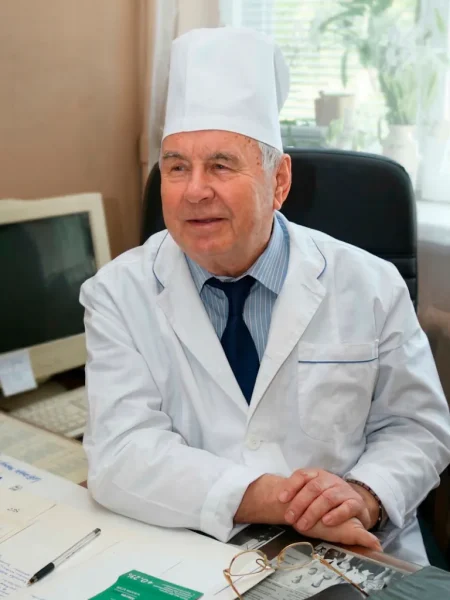
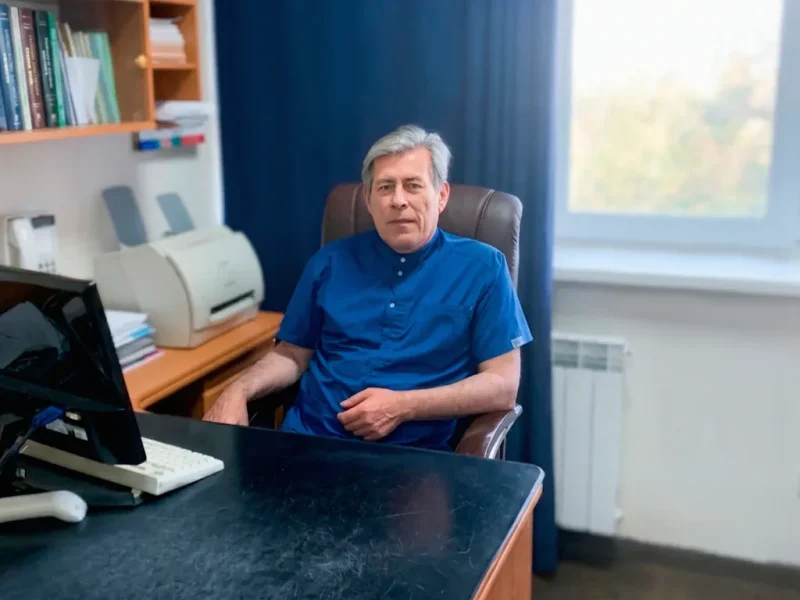
Professor Mykhailo Bolhov at his desk in the office of the Institute of Endocrinology.

My primary priority is selecting the optimal management strategy for each individual patient. Unfortunately, medical care worldwide is increasingly becoming subject to commercialization, from diagnostics to postoperative monitoring. This is a concerning trend that sometimes requires a conscientious physician to "swim against the current" of international recommendations...

M. Yu. Bolgov
Youtube channel for patients: «Simply about complexity» On the channel, you will find information about specific diseases and test results, indications for surgery, complications, postoperative monitoring, and much more.
Chronology

Life Journey

Mykhailo Bolgov graduated from the Medical Faculty of the Kyiv Medical Institute in 1988. While still a student, he worked as an emergency medical technician and a nurse in the pediatric department of the railway hospital in Kyiv. After graduating from the medical institute, he initially worked in the surgical department of the V.P. Komisarenko Institute of Endocrinology and Metabolism, but only briefly, until 1989. Following this, he worked as an ambulance doctor at substation No. 2 in Kyiv, then as a general surgeon, a proctologic surgeon, and subsequently for 3 years as an assistant at the Department of Normal Anatomy of the medical institute.

1988

With the support of the director, Mykola Dmytrovych Tronko, he returned to the surgical department of the V.P. Komisarenko Institute of Endocrinology and Metabolism of the NAMS of Ukraine.

1988

Defended his Candidate of Medical Sciences (PhD) dissertation on the topic: “Morphological diagnostics and surgical treatment of benign thyroid neoplasms in children and adolescents.”

1988

Received the academic degree of Doctor of Medical Sciences in two specialties (medical informatics and endocrinology) for research on the topic: “Information mapping of the diagnostic and treatment process in an endocrinology clinic.”

1988

Worked as the Head of the Endocrine Gland Surgery Division.

1988

Head of the Department of Endocrine Gland Surgery of the Institute.

As a mentor alone, he has performed over 1,500 surgeries jointly with young surgeons. He has been a member of the European Society of Endocrine Surgeons since 2023.

History of the School

My Mentors

No specialist emerges on their own; we were all taught at some point. Therefore, I want to pay tribute to my mentors. Thanks to their help, I took my first steps in endocrine surgery and acquired professional knowledge. I work today with memory of and gratitude towards them.

  • Ihor Vasylovych Komisarenko, founder of the Department of Endocrine Gland Surgery. His dedication to surgery, patients, and colleagues serves as an example for all of us to this day.
  • Oleksandr Hryhorovych Lysenko. He was a highly professional surgeon, an exceptionally pleasant person, and a patient mentor. He enjoyed the well-deserved respect of patients and colleagues.
  • Stanislav Iosyfovych Rybakov was distinguished by an academic mindset, and interactions with him always left patients and staff full of admiration. Today, he is also the author of numerous monographs on endocrine surgery and its history.
Igor Vasilyovich Komisarenko - Outstanding Ukrainian Surgeon
Founder of our school

Ihor Vasylovych Komisarenko

Founder of the Department of Endocrine Gland Surgery. His dedication to surgery, patients, and colleagues serves as an example for all of us to this day.

Leading surgeon of the school

Oleksandr Hryhorovych Lysenko

He was a highly professional surgeon, an exceptionally pleasant person, and a patient mentor. He enjoyed the well-deserved respect of patients and colleagues.

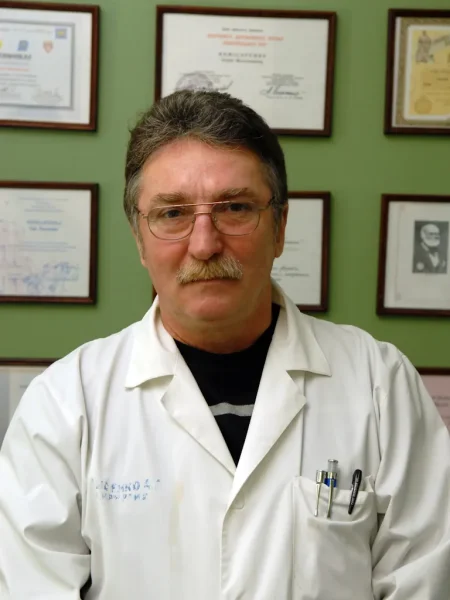
Portrait of Oleksandr Hryhorovych Lysenko, endocrine surgeon, PhD in Medicine.
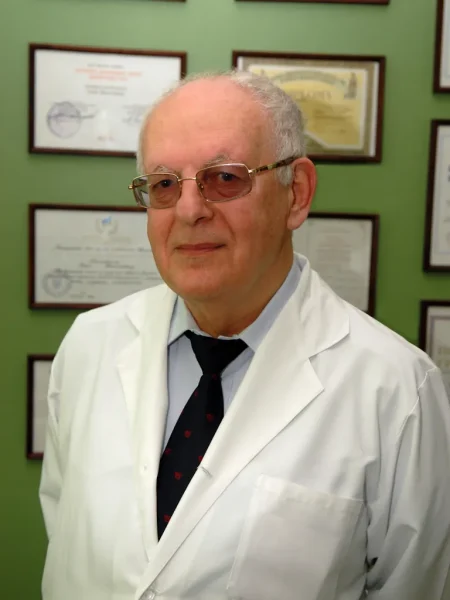
Professor Stanislav Iosyfovych Rybakov, endocrine surgeon, author of monographs.
Scientific leader of the school

Stanislav Iosyfovych Rybakov

Distinguished by an academic mindset, interactions with him always left patients and staff full of admiration. Today, he is also the author of numerous monographs on endocrine surgery and its history.

Surgery and Diagnostics

My Clinical Practice

For a surgeon, clinical practice primarily means high-quality surgical interventions, which is what I have been doing throughout my entire professional life. But not only that. Accurate diagnosis and the determination of a treatment plan—where surgery is only a stage (and not a mandatory one!), which must serve to benefit the patient—are equally essential. Patient support, particularly postoperatively, is also important and is an integral component of medical work.

Before my eyes, surgical techniques have improved, and the incidence of bleeding and other complications has significantly decreased. Today, in the vast majority of cases, patients spend a few days in the clinic from admission to discharge and have only minor and, most often, temporary complaints. On my YouTube channel, you can find videos on many topics relating to diagnostics, indications for surgery, complications, and advice on optimal problem-solving. It is clear that every patient is unique, and the videos provide only general principles, but this is exactly the kind of information patients usually look for on the Internet. Everything else requires a personal consultation, familiarization with all the details of the situation, and possibly additional examinations. Only under such conditions is it possible to obtain the most professional recommendations regarding the diagnosis (the essence of the disorders) and further treatment.

Regarding my personal contribution to the treasury of the overall improvement of surgical quality, I can say, for example, that at one time I persistently proposed and became the first to use active drains, which are standard practice for us today. I was also one of the first to introduce endoscopic adrenal surgeries. Today, I also perform endoscopic surgeries on the thyroid and parathyroid glands together with the Head of the Surgery Division, Oleksii Viktorovych Omelchuk, with whom we were the first to embark on this new path and in which we currently hold a unique priority in Ukraine.

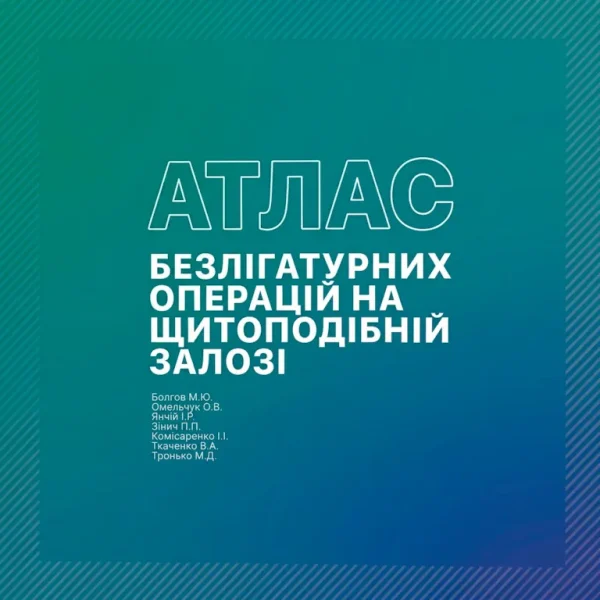
Another achievement of mine is the development of a sutureless thyroid surgery technique using the domestic PatonMed device, and later SvarMed. This technique allows for the highest quality surgical intervention without leaving any non-absorbable ligatures. Additionally, it reduces the size of the incision required for a high-quality intervention. To promote the widespread adoption of the sutureless technique, an atlas featuring detailed visual examples of all surgical stages has been published.

Professor Bolhov's atlas on sutureless thyroid surgery.

Undoubtedly, over more than 30 years, many complex surgeries have been successfully performed. Nevertheless, to this day, I constantly strive to improve my professional level both in the operating room and outside of it—in communicating with patients, the effectiveness of my explanations, and the search for optimal recommendations.

Research

My Research Directions

At the beginning of my work at the Institute of Endocrinology, while still a junior researcher, my primary focus was on studying the consequences of the 1986 Chornobyl disaster, specifically benign neoplasms in children. At that time, most researchers preferred studying malignant neoplasms. There were indeed many of them, and they undoubtedly pose a greater threat. However, the scientific analysis of benign pathology in children was poorly studied at the time. Under the guidance of experienced mentors, to whom I am still grateful for their help and support (the head of the surgical department Ihor Vasylovych Komisarenko and the head of the morphological laboratory Tetiana Ivanivna Bohdanova), my Candidate of Medical Sciences dissertation "Morphological diagnostics and surgical treatment of benign thyroid neoplasms in children and adolescents" was completed and successfully defended in 2001.

Practical surgical activity combined with research activity, particularly regarding thyroid pathology, led to a new direction in my research: the development and implementation of effective mechanisms for storing and analyzing medical data. Along this path, the TherDep medical information system was developed, which eventually became the patient registry for the institute's clinic and polyclinic and remains in operation today, assisting doctors in their clinical work and scientists in their research. Today, this registry contains information on over 450,000 outpatient records of our patients. Under my supervision, two independent research themes were completed at the Institute at the intersection of two disciplines: endocrinology and medical informatics. My Doctor of Medical Sciences dissertation, titled "Information mapping of the diagnostic and treatment process in an endocrinology clinic," was completed in these two specialties and successfully defended in 2008.

Subsequently, my scientific interests expanded to cover the entire spectrum of surgical endocrine pathology managed by the department. Among certain specific directions, I can highlight the analysis of long-term treatment outcomes (primarily based on the established electronic patient registry) and the analysis of the implementation of minimally invasive and endoscopic techniques. However, these are only the main directions. For instance, at one time, a hypothesis was proposed regarding the effect of suppressive thyroxine therapy in highly differentiated thyroid carcinomas. According to this hypothesis, supranormal (suppressive) doses of thyroxine cannot reverse the oncological process but only reduce the rate of growth and metastasis. Thus, it prolongs the existence of tumor foci until they are detected. Therefore, when observing patients, suppressive therapy most often has dubious benefits, yet it remains in international guidelines. This hypothesis (this approach) has its supporters worldwide, but in Ukraine, it still sounds quite new and unusual to many endocrinologists.

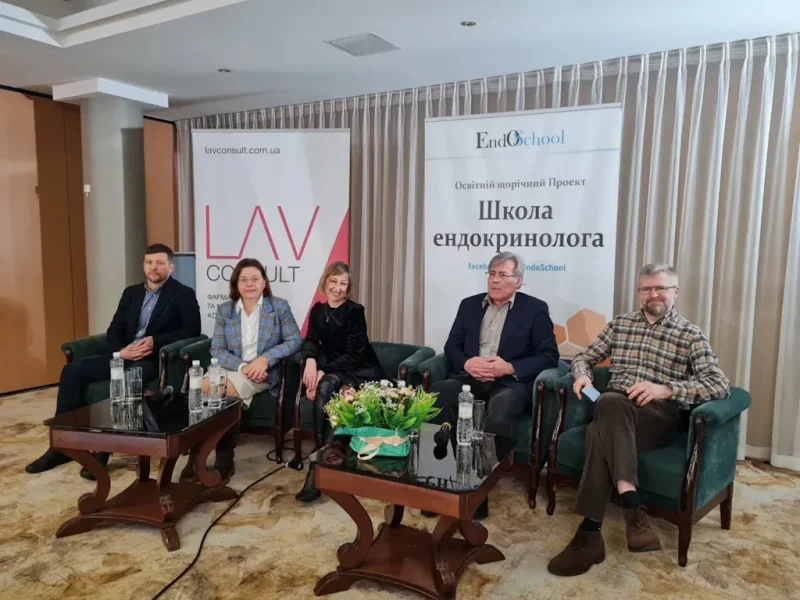
Mykhailo Bolhov in the presidium of the "School of Endocrinologists" conference.

Another individual study, which I consider important, was the clinical analysis of the world’s most common test: thyroid-stimulating hormone (TSH). This test is often evaluated within very narrow limits, down to tenths, in which the result must fall, and patients have great fears about exceeding these limits, expecting almost a disaster. In reality, as proven by numerous studies, the TSH result depends on many factors and can fluctuate by whole units from day to day, and up to 20% from laboratory to laboratory. There are fundamental studies on this topic worldwide. We also conducted our own research and showed (confirmed) that fluctuations in the TSH result can be quite significant; that is, there is no reason to try to align TSH to the tenths and expect problems from going beyond the conditional limits of the norm, especially when these limits are further narrowed in some cases. This is also not news globally, but as is the case with many other issues in our lives today, this information is not widely disseminated, unlike international guidelines, which everyone reads and sometimes perceives as the ultimate truth in every detail.

These are just a few examples, as work in a scientific institution requires constant scientific pursuit, and in fact, this is our continuous way of life. I must note here that it is precisely scientific work that not only provides a doctor with information but also encourages them to always ask questions and seek well-founded answers. Therefore, it is predominantly in scientific institutions that one can find truly thinking physicians.

Team and Innovations

Our Surgical Department

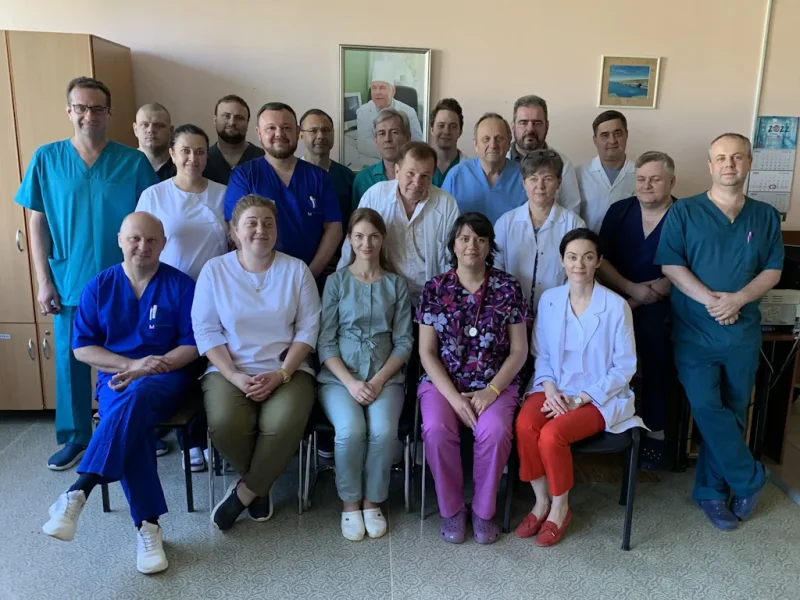
Today, highly qualified specialists work in our highly professional department, and I can say with full responsibility that turning to any of them is an excellent choice. Ever since the time of our founder and teacher Ihor Vasylovych Komisarenko, the surgical department has maintained a respectful attitude towards the patient, prioritizing high-quality care, alongside benevolence and mutual assistance among the staff.

The team of the endocrine surgery department led by Professor Mykhailo Bolhov.
Surgery without Scars

Endoscopic Thyroid Surgeries

Surgeries on the thyroid and parathyroid glands in the world and in Ukraine are predominantly performed using an open approach, despite the fact that endoscopic techniques have undergone rapid development in recent decades and prevail in a number of surgical fields. For example, in endocrine surgery, the gold standard today for removing adrenal tumors is precisely the endoscopic approach.
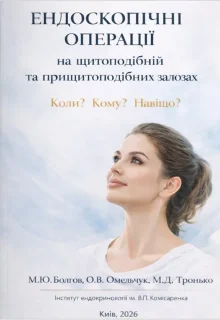
The clinic of the Institute of Endocrinology and Metabolism has been actively implementing endoscopic techniques since 2012. Today, to the best of our knowledge, in Ukraine, endoscopic thyroid surgeries are performed only in the clinic of the Institute of Endocrinology and Metabolism in Kyiv. The first endoscopic surgery via the axillary-breast approach was performed in 2016 by Mykhailo Yu. Bolgov. The first transoral endoscopic surgery (through the oral vestibule) was performed by Oleksii V. Omelchuk in 2017. Today, it is Bolgov M.Yu. and Omelchuk O.V. who possess experience in performing endoscopic neck interventions. They have already successfully performed about 40 such surgeries without a single conversion to an open procedure.

Title page of the informational brochure for patients regarding endoscopic neck surgeries.
Текст

Визнання

Текст

Текст

Думки

Текст

Contact us

Stay in touch

Contact information

Ukraine, Kyiv,
69 Vyshhorodska Street

mikebolgov@gmail.com

+38 (096) 770‑4234

@mkbolgov